If you run a children’s fashion e-commerce store, be careful when using AI-generated children in your product imagery.
Not because artificial intelligence is inherently bad. Not because it cannot help you produce content, test visual concepts, or accelerate creative workflows. The issue is something else: when an image of a child looks almost real—but not quite—our brains notice. And when this happens in a category as sensitive as childhood, the reaction is rarely admiration. It’s distrust.
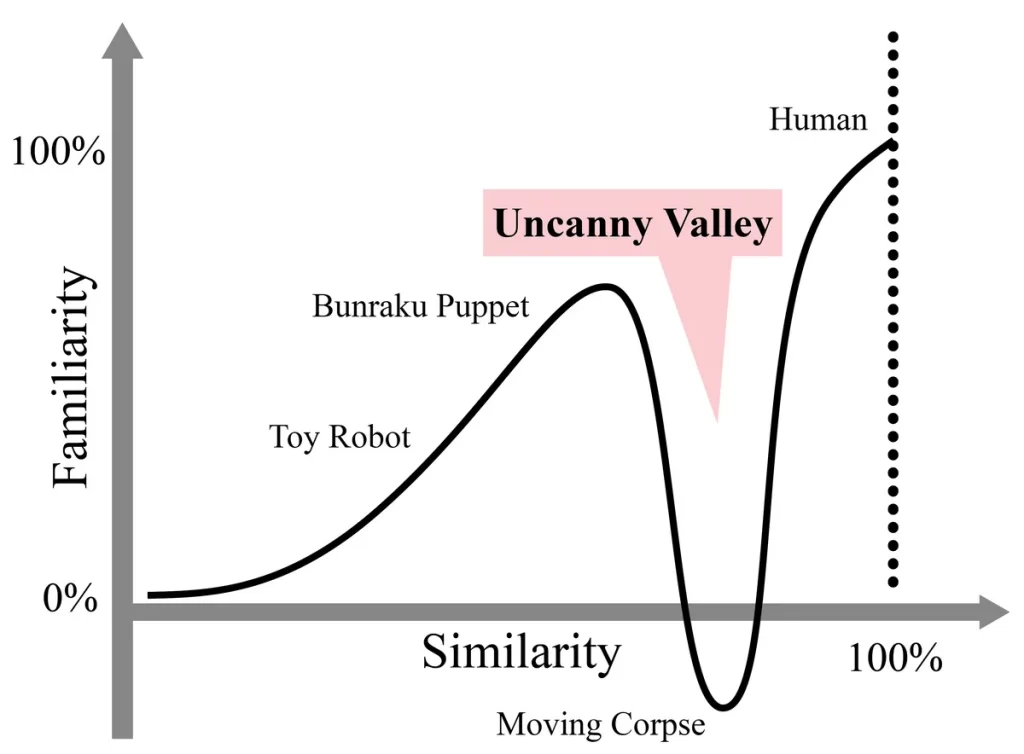
This phenomenon is known as the uncanny valley.
What Is the Uncanny Valley?
The uncanny valley describes the feeling of discomfort people experience when an artificial human figure looks very similar to a real person but still contains subtle imperfections: an unnatural gaze, overly smooth skin, an awkward smile, strange proportions, or facial expressions that don’t quite make sense.
The more human something appears, the more we expect it to behave like a human. When it comes close but falls short in small details, our brains don’t interpret it as innovative or beautiful. Instead, they perceive that something feels off.
In children’s fashion, that effect becomes even stronger.
Why It Happens More Often With AI-Generated Children
Images of children carry a unique emotional weight. Consumers are not only evaluating a garment; they are assessing comfort, safety, authenticity, trust, and emotional connection. Parents don’t buy children’s clothing based solely on color or price. Consciously or unconsciously, they ask themselves:
- Does this fabric look comfortable?
- Does this child seem real?
- Does this brand feel trustworthy?
- Does this scene feel authentic?
- Can I imagine my child wearing this?
When an image is AI-generated and the child appears unnatural, overly perfect, or emotionally disconnected, that connection breaks. The product stops feeling relatable and starts feeling suspicious.
And in e-commerce, suspicion kills conversions.
The Problem Isn’t AI. The Problem Is Replacing Trust
AI can be incredibly valuable for children’s brands. It can help create mood boards, explore campaign concepts, generate backgrounds, build visual prototypes, and streamline creative processes.
But there’s a significant difference between using AI as a creative tool and using it to replace the human authenticity that customers expect.
In a children’s fashion e-commerce store, product imagery does more than showcase clothing. It communicates scale, texture, context, and a promise that the product belongs in a real family’s life.
If the child model doesn’t feel real, that promise weakens.
Signs That an AI Image Has Entered the Uncanny Valley
Before publishing AI-generated images in your online store, look for these warning signs:
- The eyes appear empty, rigid, or unnaturally intense.
- The smile doesn’t match the rest of the facial expression.
- Hands, fingers, ears, or teeth look unusual.
- The skin appears plastic-like or excessively perfect.
- The clothing doesn’t fall naturally on the body.
- The proportions don’t match the child’s apparent age.
- The scene feels emotionally artificial.
- The overall image creates discomfort, even if it’s hard to explain why.
That last point matters more than most marketers realize. If someone on your team says, “I can’t explain it, but something feels weird,” that’s often your audience’s subconscious reaction too.
What Children’s Brands Should Do Instead
For product pages, e-commerce photography, and campaigns where trust matters most, real photography remains the strongest option. Real children, real families, and authentic situations create a level of credibility that AI still struggles to replicate.
That doesn’t mean AI has no place in the process. It can be extremely useful:
- Creating neutral or conceptual backgrounds.
- Testing creative directions before production.
- Generating mood boards and visual references.
- Adapting campaign formats and assets.
- Supporting editorial and storytelling content.
- Improving efficiency without compromising authenticity.
A practical rule is simple: use AI to enhance creativity, not to simulate trust.
If your brand is evaluating how to integrate AI into its visual strategy, the discussion should begin with brand development, not just image generation.
In Children’s Fashion, Authenticity Converts
Children’s brands operate differently from most consumer categories. They don’t just sell products. They sell reassurance. They don’t just sell style. They sell confidence.
When imagery feels artificial, the impact isn’t only visual. It affects brand perception.
A poorly executed AI image can make a beautiful collection feel less professional. It can make a thoughtful brand appear opportunistic. It can make a carefully designed store seem less trustworthy. And it can cause visitors to leave without consciously understanding why.
A Checklist Before Using AI Visuals in Children’s Marketing
Before publishing an AI-generated image, ask yourself:
- Does this image genuinely help customers understand the product?
- Does the scene feel believable for a real family?
- Does the child’s expression feel natural?
- Is the product represented accurately?
- Could the image create doubts about authenticity?
- Would we confidently place this image on our homepage?
- Is it clear what is creative interpretation and what represents the real product?
If there is any hesitation, avoid using it on product pages. It may work as inspiration internally, but not necessarily as a sales asset.
If the issue extends beyond imagery and affects the customer experience as a whole, it may be worth reviewing your Shopify e-commerce strategy or your broader digital marketing approach.
Conclusion: AI Cannot Replace Brand Sensitivity
The uncanny valley is not just a concept from robotics or science fiction. It is a useful warning for children’s brands embracing AI-generated visuals.
In children’s fashion, something that looks almost human can often perform worse than something that is clearly illustrative or artistic. When an image tries to appear real and fails, it doesn’t feel innovative—it feels unsettling.
AI absolutely has a place in children’s marketing. But in categories where trust is part of the product itself, creative direction matters more than the tool being used.
And if your children’s fashion e-commerce store is filled with AI-generated children that look slightly too perfect, the solution may not be better prompts. It may be a better brand strategy.