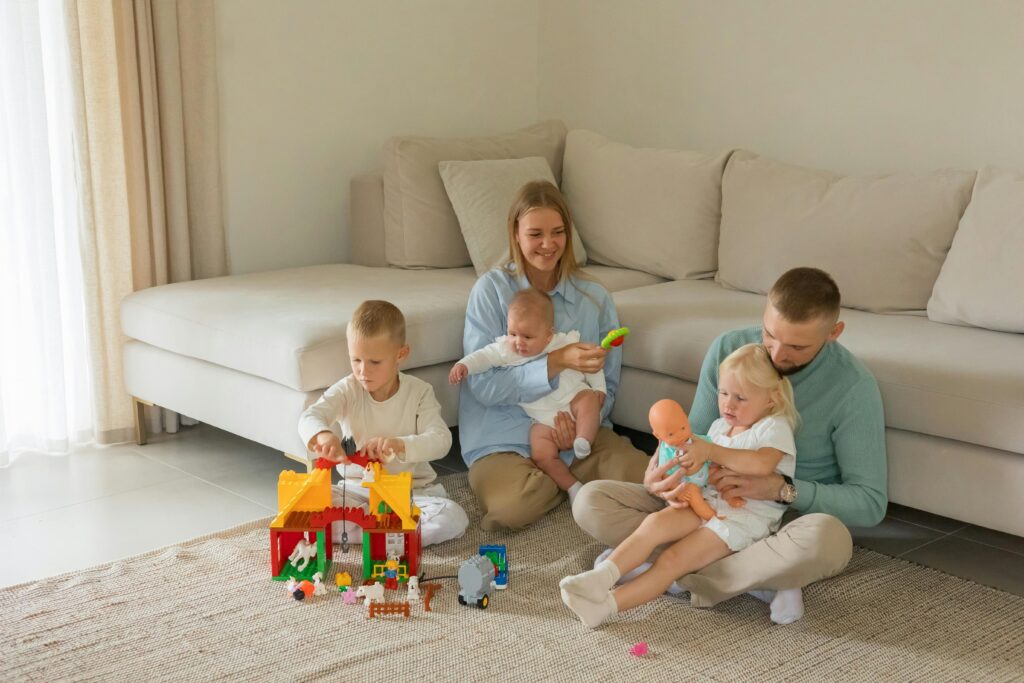

Brand positioning matters in baby ecommerce because families rarely buy only a product. They buy a sense of trust, fit and confidence. A stroller, nursery textile, feeding product, baby garment or maternity item may be practical, but the decision is also emotional. Parents want to feel that the brand understands the stage of life they are in.
When positioning is unclear, ecommerce becomes harder. Product pages need to work too hard, ads rely more on discounts, content sounds generic and customers compare the brand mostly on price. Strong positioning gives every touchpoint a clearer reason to exist.
What brand positioning means in baby ecommerce
Brand positioning is the strategic answer to a simple question: why should this brand matter to this audience, in this category, at this moment? In baby ecommerce, that answer must connect product value with family reality.
A brand may position around design, safety, sustainability, convenience, premium materials, expert guidance, emotional reassurance, gifting, lifestyle or specialist category knowledge. The point is not to claim everything. The point is to make the most relevant value easy to understand and remember.
This is why brand development for baby brands should happen before a brand tries to scale traffic. Without a defined position, every channel has to invent its own message.
Positioning reduces hesitation
Baby ecommerce is full of hesitation. Families compare reviews, materials, sizes, safety cues, delivery, returns and price. They may also ask friends, search Google, save social posts and revisit product pages several times before buying.
Positioning cannot remove every doubt, but it can make the choice feel more coherent. If a brand is clearly the specialist in organic nursery textiles, the most practical option for compact city living or the premium choice for design-led gifting, the customer has a stronger mental shortcut.
Why generic brands compete on price
When a baby brand sounds like everyone else, price becomes the easiest comparison. Claims such as high quality, made with love or perfect for families are not enough unless they are supported by specific proof.
Clear positioning gives the brand a different basis for comparison. A customer can understand why one product costs more, why a collection is designed in a certain way or why the brand is a better fit for a particular parenting need. That does not mean every brand must be premium. It means the value should be legible.
How positioning shapes product pages
Product pages are often where weak positioning becomes visible. If the page only lists features, the customer has to translate those features into meaning. A stronger page explains who the product is for, what situation it solves, what makes it distinct and what the family should feel confident about.
A well-structured Shopify experience for children’s brands can turn positioning into practical ecommerce decisions: collection architecture, product naming, filters, copy blocks, review placement, size guidance and trust signals.
Positioning also improves content strategy
Content becomes much more useful when the brand knows its position. A brand focused on expert guidance can publish comparison guides, FAQs and practical buying criteria. A design-led brand can create editorial stories around interiors, materials or style. A sustainability-led brand can explain sourcing, durability and care.
The same applies to SEO. A brand with a clear point of view can build content clusters that support its category authority instead of chasing disconnected keywords. That is especially important in categories where trust and education shape demand.
What strong positioning should clarify
- Audience: who the brand serves most clearly and what stage or need they are in.
- Category role: what the brand wants to be known for within baby, kids or family ecommerce.
- Value: what customers should understand beyond product features.
- Proof: what signals make the promise credible.
- Tone: how the brand speaks so it feels consistent across product pages, ads, email and social media.
- Next step: what action the customer should naturally take after understanding the brand.
Examples of positioning choices
A nursery furniture brand may position around calm, long-lasting design for small spaces. A baby clothing brand may focus on soft essentials for sensitive skin. A feeding brand may lead with practical support for busy families. A toy brand may emphasize open-ended play and developmental value.
Each position leads to different content, imagery, product copy and campaigns. The strongest ecommerce brands do not try to speak to every possible buyer in the same way. They make a specific buyer feel understood.
How positioning supports acquisition
Traffic acquisition becomes more efficient when the brand message is clear. Ads can test stronger angles, SEO pages can target more precise intent and social content can repeat a recognizable point of view. A broader digital marketing strategy for baby products works better when every channel reinforces the same strategic center.
Positioning also helps retargeting. Instead of showing the same product repeatedly, the brand can remind visitors of the reason to choose it: expert fit, material quality, easier routines, thoughtful gifting or category specialization.
Common positioning mistakes in baby ecommerce
- Trying to appeal to every parent: broad messaging often becomes forgettable.
- Confusing aesthetics with positioning: a beautiful brand still needs a clear strategic reason to matter.
- Relying only on product features: features need interpretation and proof.
- Changing tone by channel: inconsistency between ads, product pages and emails weakens trust.
- Competing only through promotions: discounts can support a campaign, but they cannot replace differentiation.
A practical framework
- Define the most valuable audience segment, not just the broad market.
- Identify the decision moment where the brand can be most useful.
- Clarify the promise in one sentence.
- List the proof points that make the promise believable.
- Translate the positioning into product pages, category pages, ads and content.
- Measure whether customers repeat the value back through reviews, search queries and sales conversations.
Positioning and trust work together
Parents and family buyers trust brands that feel coherent. A clear position makes it easier for customers to understand the brand, remember it and explain it to someone else. That clarity can support conversion, but it also supports long-term brand equity.
Babycare Agency works with baby, kids and family brands to connect positioning with ecommerce, content and acquisition. The goal is not only to make the brand look better. It is to make the brand easier to choose.
Frequently asked questions
Is brand positioning only relevant for premium baby brands?
No. Every baby ecommerce brand needs a clear position. Premium brands may use it to justify value, but accessible brands also need to explain why they are useful, credible and different.
How does positioning affect conversion?
It reduces ambiguity. When customers understand who the product is for, why it matters and why the brand is credible, product pages and campaigns have less resistance to overcome.
Can positioning improve SEO?
Yes. A clear position helps define content clusters, category language, internal links and the type of questions the brand should answer to build authority.
What is the first sign that positioning is weak?
A common sign is that every channel says something different, or that customers compare the brand mainly by price because the value is not clear enough.