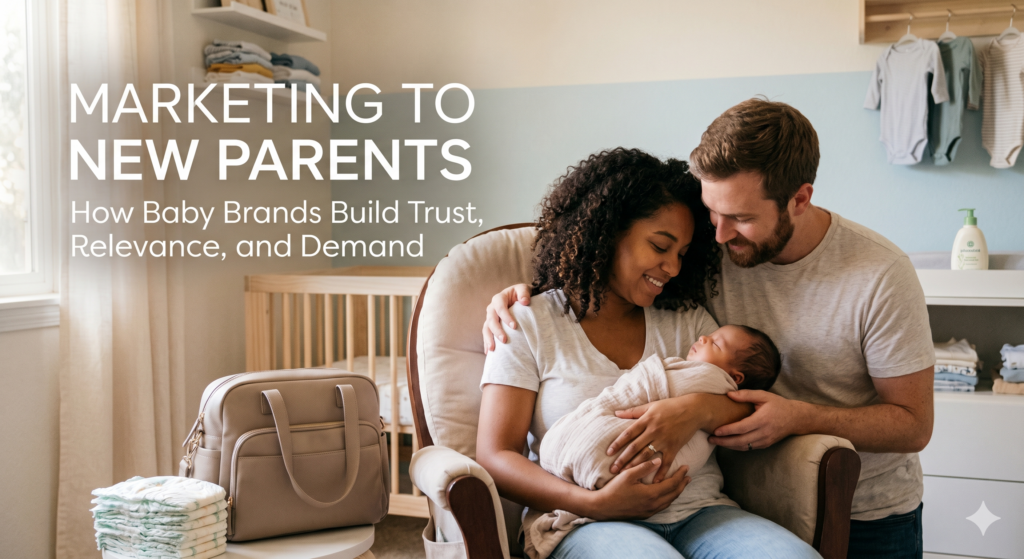

Digital marketing for maternity brands requires more than broad targeting toward women or parents. Maternity, pregnancy, postpartum and early family life are sensitive moments with changing needs, emotional weight and very different levels of urgency. A brand has to be useful, clear and trustworthy before it can expect attention to convert.
For maternity brands, the customer journey is often shaped by timing. Someone may be planning, pregnant, preparing for birth, recovering postpartum, gifting, supporting a partner or looking for professional advice. Each stage changes the message, channel and level of detail the brand should provide.
Why maternity marketing needs a specific approach
Maternity audiences are not a single segment. A first-time mother, a postpartum parent, a gift buyer, a healthcare-adjacent professional and a family preparing for a second child may all interact with the same brand for different reasons.
This is why sector understanding matters. Babycare’s work with maternity brands starts from the idea that trust, timing and emotional intelligence are central to growth. The strategy should never feel generic or insensitive.
Start with journey mapping
A maternity brand should map the stages that matter for its offer. Some products are discovered early in pregnancy. Others become relevant in the third trimester or after birth. Services, clothing, skincare, wellbeing products, feeding support and recovery products all follow different timelines.
Mapping those stages helps decide which content, campaigns and landing pages are needed. It also prevents the brand from using one message for everyone.
SEO captures questions at the right moment
Search is powerful in maternity because people ask detailed, personal and practical questions. They look for reassurance, comparisons, safety information, product guidance and signs that a brand understands what they are experiencing.
A wider digital marketing strategy for baby products should use SEO to organize those questions into useful pages: guides, FAQs, product-led content, service pages and category explanations.
Social media builds familiarity and trust
Social media can help maternity brands show tone, values and practical use. But the content must be careful. Overly perfect imagery, pressure-based messages or exaggerated promises can create distance. Real explanations, product use, founder perspective, expert collaboration and community questions usually feel more credible.
A thoughtful social media strategy for children’s brands can adapt well to maternity when it respects sensitivity and avoids treating the audience as a stereotype.
Ecommerce and conversion details matter
If the brand sells online, the product page must reduce uncertainty. Maternity shoppers often need information on sizing, comfort, ingredients, materials, use timing, shipping, returns and suitability for specific stages. If those details are missing, paid and organic traffic will struggle to convert.
For brands selling internationally or expanding into new markets, international marketing for baby brands can also influence language, claims, cultural context and market entry priorities.
Content themes that work well
- Guides by pregnancy or postpartum stage.
- Product explainers with practical use cases.
- Comparison content that helps users choose without pressure.
- FAQs based on real customer concerns.
- Founder or expert-led content that builds credibility.
- Gift guides for partners, friends and relatives.
Paid media should respect timing
Paid campaigns can be useful, but they need careful audience logic. Retargeting, search campaigns and social ads should reflect where the person is in the journey. A message for discovery should not look like a hard conversion push. A message for cart abandoners should answer the likely doubt.
This is especially true when products are intimate, health-adjacent or emotionally loaded. The safest approach is useful, specific and respectful.
How to measure maternity marketing
Beyond sales, maternity brands should look at qualified traffic, product page engagement, email signups, assisted conversions, repeat purchase, customer questions, content engagement and branded search. Some decisions take time, and the first interaction is not always the final conversion point.
Search behavior around marketing to new parents also shows that trust and timing often matter as much as channel choice.
Common mistakes
- Using one message for all maternity stages.
- Relying on generic lifestyle imagery without practical information.
- Making claims that are too broad or not properly supported.
- Ignoring partners, gift buyers or professional buyers when relevant.
- Sending paid traffic to thin product pages.
- Measuring only last-click conversions.
Frequently asked questions
What channels work best for maternity brands?
Usually a mix of SEO, social media, email, paid media and ecommerce optimization. The right balance depends on the product, price point and stage of the customer journey.
Is maternity marketing different from baby marketing?
Yes. The audience, timing, sensitivities and questions can be different. Maternity brands often need more careful messaging around body, recovery, wellbeing and personal experience.
How can a maternity brand build trust online?
By being specific, transparent and useful: clear product details, realistic imagery, helpful content, social proof, careful claims and an experience that respects the user’s stage.
Digital marketing for maternity brands works when the brand understands the moment behind the search, the click or the purchase. The more accurately the strategy respects that moment, the stronger the connection becomes.