
Building a premium baby brand online is not about making the website look expensive. In family categories, premium is a perception of care, trust, usefulness and coherence. Parents and gift buyers need to understand why the brand deserves attention, why the product feels safer or more thoughtful, and why the experience is worth more than a cheaper alternative.
A premium baby brand earns that position through every digital signal: the promise on the homepage, the clarity of product pages, the tone of social content, the quality of images, the way objections are answered and the confidence created before checkout. When those signals work together, the brand starts to feel considered rather than simply priced higher.
What premium means in the baby and family market
In baby products, premium does not mean distant, glossy or inaccessible. It usually means better decision support. A family may pay more when the brand explains materials clearly, shows real use, reduces uncertainty, feels emotionally intelligent and creates a sense that someone has thought through the details.
This is why premium positioning needs a clear strategic base. A strong brand development process for baby products defines who the brand is for, what it stands for and what makes the offer meaningfully different. Without that foundation, premium can become a visual style rather than a business position.
Start with a specific point of view
Premium baby brands need more than broad claims such as high quality, beautiful design or made for families. Those phrases may be true, but they are too easy to copy. A stronger point of view explains the particular problem the brand solves and the belief behind the product.
For example, a nursery furniture brand might stand for calm, modular spaces that grow with the child. A feeding brand might stand for practical confidence during messy daily routines. A maternity brand might stand for support without pressure. Specificity makes the brand easier to remember, easier to recommend and easier to defend.
Build trust before asking for conversion
Parents rarely make baby-related purchases in a purely impulsive way. Even when the product is beautiful, they still look for reassurance. They compare options, check reviews, read product details and look for signals that the brand understands their situation.
That means trust must appear before the cart. Useful content, clear product education and consistent messaging are part of a wider digital marketing strategy for baby products. The goal is not only to attract traffic, but to help visitors feel informed enough to move forward.
Make the ecommerce experience feel premium
A premium perception can collapse quickly if the ecommerce experience is confusing. Product pages should explain fit, age or stage, materials, care, shipping, returns and practical use. Category pages should guide choice, not just display products. Navigation should make the customer feel oriented.
For brands selling direct to consumer, a strong Shopify experience for children’s brands can support premium positioning through speed, structure, merchandising, visual consistency and clear conversion paths. The store should feel easy because the brand has done the thinking for the customer.
Use content to show expertise, not just taste
Premium family brands often invest in imagery and identity, but content is what proves depth. Articles, guides, FAQs, comparison pages and buying advice can show that the brand understands the real questions behind the purchase. This is especially important in categories related to sleep, feeding, mobility, safety, gifting or first-time parenthood.
A thoughtful SEO strategy for baby and family brands can turn that expertise into discoverable content. The strongest pieces answer real questions clearly, connect to the product or service naturally and avoid sounding like a sales brochure.
Keep the tone calm and precise
Premium baby brands should avoid exaggeration. Fear, urgency and oversized promises can reduce credibility in sensitive family categories. A stronger tone is calm, specific and useful. It explains benefits without pressure and speaks to parents as capable people, not as anxious targets.
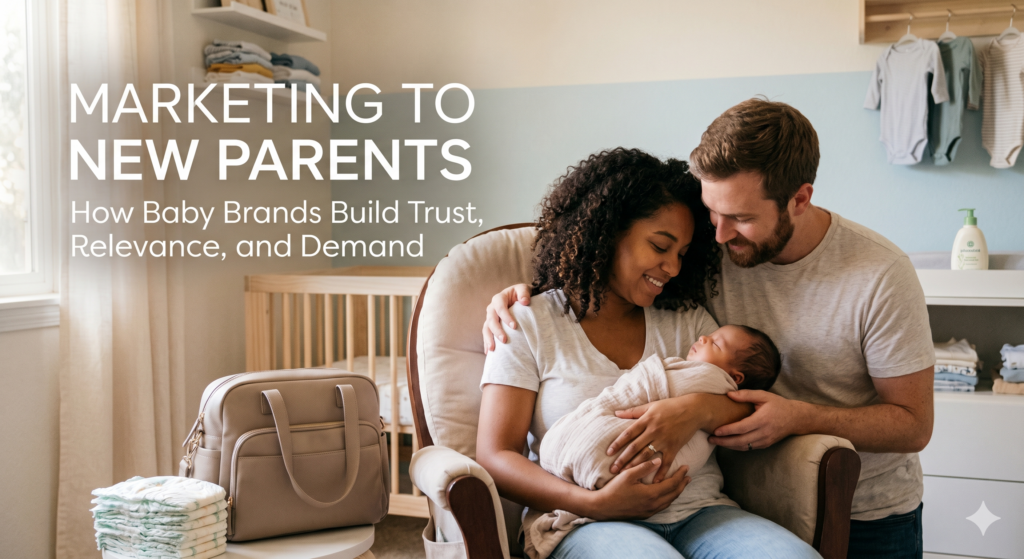
This matters especially when marketing to new parents. The decision journey often includes emotion, research and comparison. Content that respects that journey can build more durable trust than a discount-led message. Babycare’s guide to marketing to new parents explores this audience logic in more depth.
Premium signals to review
- Positioning: the brand has a clear role, audience and reason to exist.
- Product information: materials, use, care and fit are explained without ambiguity.
- Visual consistency: photography, typography, color and layout support the same perception.
- Trust proof: reviews, guarantees, policies and expertise are easy to find.
- Content quality: guides and FAQs answer real doubts, not generic topics.
- Customer journey: every step feels intentional, from discovery to checkout and post-purchase.
Common mistakes when trying to look premium
One mistake is relying only on visual polish. A beautiful site with vague copy can still feel weak. Another is hiding practical information because it seems less elegant. In baby categories, clarity is part of the premium experience. Families should not have to work hard to understand what they are buying.
It is also risky to compete on aspiration alone. A premium baby brand needs emotional appeal, but it also needs evidence: product detail, use cases, reviews, customer support and a reason to trust the brand beyond the image. Stronger trust signals are what make the premium promise believable, as shown in this guide on how baby brands build trust online.
A practical framework
- Define the audience and the moment of family life the brand serves.
- Clarify the brand promise in one specific, defensible sentence.
- Translate that promise into product pages, content, creative and service.
- Remove friction from the ecommerce journey.
- Add trust proof where hesitation naturally appears.
- Measure whether customers understand the value before they compare price.
Frequently asked questions
Can a baby brand be premium without luxury pricing?
Yes. Premium is partly about price, but it is also about perceived care, clarity, trust and experience. A brand can feel premium when the value is easy to understand and the customer journey feels considered.
What is the first step to building a premium baby brand?
The first step is positioning. The brand needs to define who it serves, what problem it solves, why it is different and how that difference appears across product, content and ecommerce.
Does premium branding improve conversion?
It can, when it reduces hesitation and makes the value feel believable. Visual identity alone is not enough; the website must also answer practical questions and support trust.
A premium baby brand is built when strategy, content and ecommerce tell the same story. The customer should not only see that the brand looks better. They should feel that the brand has made the decision easier, safer and more meaningful.